
Paulownia Soil and Climate Requirements: Agroclimatic Guide
Learn the exact climate and soil requirements for Paulownia Clon InVitro 112®, including pH ranges, water table limits, and soil preparation techniques.
The ideal agroclimatic envelope for Paulownia Clon InVitro 112®
Since our founding in 1986 as a pioneering plant micropropagation laboratory in Barcelona, Spain, we have continuously evaluated the environmental adaptability of proprietary selections. Our Paulownia Clon InVitro 112® (widely known in commercial and environmental markets as the Oxytree) is a fast-growing, non-GMO hybrid of Paulownia elongata and Paulownia fortunei developed in vitro. Field trials demonstrate that this registered clone exhibits exceptional thermal plasticity. The elite hybrid maintains physiological function across extreme temperature thresholds, enabling reliable commercial establishment across diverse global zones.
- Extreme Thermal Resilience: Fully dormant mature specimens withstand severe winter minimums, while active foliage thrives in intense summer heat.
- Solar Exposure Requirements: Requires full direct sunlight with high annual sunshine hours for maximum annual biomass accumulation.
- Thermal Summation: Needs an extended active growing season with warm mean daily temperatures.
- C4 Photosynthetic Efficiency: Possesses a C4-like photosynthetic pathway that grants a competitive advantage over typical C3 forest species, dramatically accelerating carbon fixation.
To achieve optimal growth rates and uniform trunk development, commercial growers must align site selection with these core microclimatic parameters. While juvenile plants require irrigation during their initial establishment phase, mature micropropagated specimens leverage their deep root systems to maintain metabolic productivity during extended dry periods. Our 40+ years of experience in micropropagation guarantee that every unit supplied delivers identical genetic stability and proven agroclimatic adaptability across Mediterranean, continental, and semi-arid forestry projects.
Soil texture, depth, and internal drainage requirements
At IN VITRO SL, our 40+ years of tissue culture micropropagation research demonstrate that physical soil architecture directly dictates the vegetative vigor and trunk architecture of Paulownia Clon InVitro 112®. While this proprietary hybrid displays remarkable pedological adaptability across diverse regions, maximizing commercial timber and biomass yields requires specific physical soil properties. Light, porous soils allow young micropropagated plantlets to rapidly establish a robust root system before initiating rapid vertical growth.
| Soil Parameter | Optimal Threshold | Agronomic Impact |
|---|---|---|
| Soil Texture | Sandy loam to light loam | Facilitates lateral root spreading and aeration |
| Effective Root Depth | ≥ 1.5 to 2.0 meters | Accommodates vertical taproot development |
| Bulk Density | < 1.4 g/cm³ | Prevents mechanical resistance to root growth |
| Drainage & Water Table | Well-drained (water table > 1.5 m) | Eliminates anaerobic conditions and root hypoxia |
Taproot expansion and the necessity of rapid internal drainage
The primary root architecture of Paulownia Clon InVitro 112® relies on a deep-penetrating taproot designed to access subsurface moisture reserves. In loose, deep soils with high porosity, root biomass can reach depths exceeding 2 meters, providing drought resistance once established. Conversely, heavy clay soils or hardpans restrict vertical penetration, forcing root development into shallow horizontal layers that compromise structural stability and water uptake during dry periods.
Saturated soil conditions represent the single greatest environmental risk for commercial plantations. Prolonged waterlogging causes rapid oxygen depletion around the root zone, leading to root asphyxiation, fungal infection, and plant mortality. Field observations confirm that Paulownia Clon InVitro 112® requires well-drained ground where standing water evacuates rapidly. Where soil drainage is marginal, land preparation interventions such as deep subsoiling or raised planting beds are essential before plantation setup.
Optimal soil pH, salinity thresholds, and water table limits
Establishing a high-yielding plantation of Paulownia Clon InVitro 112® requires rigorous site evaluation based on soil chemical boundaries and hydrological conditions. Drawing on our 40+ years of experience, we emphasize that field verification of soil chemistry is vital for securing maximum timber increment and biomass accumulation. Although our non-GMO hybrid exhibits broad adaptability across international climates, sub-optimal pH levels, excessive soil salinity, or shallow groundwater can restrict root development and jeopardize plantation performance.
| Soil Parameter | Optimal Target Range | Critical Boundary Limit | Agronomic Impact |
|---|---|---|---|
| Soil pH Range | 5.0 to 7.0 | Below 4.5 or above 8.0 | Inhibits micronutrient availability and root development |
| Soil Salinity (EC) | Below 0.5 dS/m | High total salts | Induces osmotic stress and leaf tip necrosis |
| Water Table Depth | 1.5 m to 5.0 m | Minimum 1.5 m from surface | Prevents root asphyxiation and taproot decay |
The optimal chemical envelope for Paulownia Clon InVitro 112® features a soil pH between 5.0 and 7.0. Within this neutral to slightly acidic range, key nutrients such as phosphorus, nitrogen, and essential trace elements remain fully bioavailable to support C4 photosynthesis. In overly acidic soils (below pH 4.5), calcium or agricultural lime amendments must be applied during land preparation. Additionally, soil salinity must remain below 0.5 dS/m. High concentrations of soluble sodium or chloride ions induce osmotic stress, impairing water absorption and causing leaf margin necrosis.
Hydrological conditions dictate root architecture and structural stability. Paulownia Clon InVitro 112® establishes a profound taproot system designed to tap into subsoil water tables down to 5 meters. However, the water table must maintain a minimum depth of 1.5 meters from the surface[1]. Saturated soil conditions that persist for more than 48 hours create anaerobic conditions in the root zone, leading to vascular asphyxiation and stand loss. Growers operating on poorly drained sites must construct raised beds or deep drainage ditches to maintain groundwater below critical limits.
Frost tolerance and extreme temperature resilience
At IN VITRO SL, our 40+ years of experience in plant biotechnology have enabled us to rigorously evaluate the physiological limits of Paulownia Clon InVitro 112® across diverse continental regimes. As a fast-growing, non-GMO C4 photosynthesis pathway hybrid of Paulownia elongata and Paulownia fortunei developed in vitro, this registered clone exhibits exceptional thermal tolerance, withstanding extreme operational temperature thresholds ranging from -25 °C to +45 °C. The C4 photosynthetic mechanism provides a distinct physiological advantage during intense summer heat, preventing photorespiratory slowdown and maintaining active biomass accumulation.
Despite high mature frost hardiness, juvenile field performance depends directly on tissue lignification timing. In first-year plantations, unexpected early autumn frosts can impact soft terminal shoots if late-season fertilization or over-irrigation delays dormancy. Controlled reduction of water supply in late summer accelerates stem woodiness and terminal bud formation, effectively protecting young trees prior to winter dormancy.
| Developmental Phase | Thermal Tolerance | Physiological Response | Silvicultural Recommendation |
|---|---|---|---|
| Juvenile (Year 1) | -5 °C to +45 °C | Apical growth active; unlignified vascular tissue | Autumn irrigation reduction; greenhouse hardening |
| Established (Year 2+) | -25 °C to +45 °C | Full stem lignification and deep root anchoring | Standard forestry maintenance and seasonal dormancy |
| Extreme Heat (> 40 °C) | Up to +45 °C | C4 carbon fixation efficiency; low transpiration stress | Ensure baseline sub-surface moisture during heat waves |
Because Paulownia Clon InVitro 112® is a registered, genetically stable hybrid reproduced in vitro from a single genotype, commercial growers benefit from predictable cold hardiness and uniform growth cycles across the entire plantation stand, eliminating the variable frost mortality typical of unselected seed stock.
Soil preparation, subsoiling, and weed control before planting
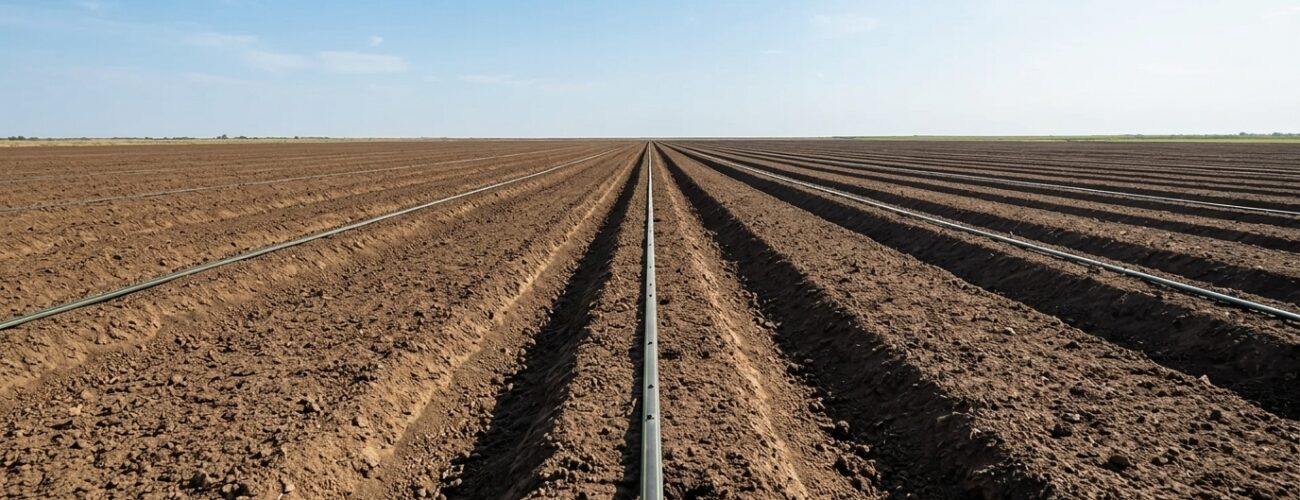
Proper land preparation is critical to ensuring rapid taproot establishment and avoiding premature growth stagnation in commercial forestry plantations. Before planting Paulownia Clon InVitro 112®, the soil must undergo deep mechanical loosening to eliminate subsurface compaction layers and hardpans. We specify subsoiling or deep ripping to a depth of up to 80 cm along the intended planting rows. Breaking these dense soil strata enables the taproot to penetrate deeply into lower soil profiles, securing anchorage and facilitating uninhibited access to capillary groundwater during dry periods.
- Deep Subsoiling: Perform deep ripping during dry late-summer or autumn conditions to fracture hardpans without causing soil smearing.
- Primary Weed Control: Eradicate competitive perennial weeds across the plantation zone using systemic non-residual herbicides or mechanical disk harrowing prior to planting.
- Planting Hole Preparation: Excavate planting holes to a sufficient depth and diameter to create a loosened, aerated root zone.
- Soil Refilling and Conditioning: Backfill each hole with topsoil enriched with balanced organic matter, ensuring no air pockets remain around the root system.
Eliminating competitive vegetation prior to and immediately following planting is paramount, as weed competition for moisture and soil nutrients severely depresses early vegetative vigor. Because our micropropagated plants transition directly from acclimatized greenhouse hardening facilities to field conditions, maintaining a clean, weed-free radius of at least 1 meter around each plantlet during the initial 12 months maximizes root expansion and guarantees uniform stand establishment across diverse agricultural soils.
For large-scale commercial plantations, combining subsoiling with systematic mechanical cultivation or biodegradable mulching prevents weed re-infestation while preserving soil moisture. Over our 35+ years of experience in plant tissue culture and micropropagation, proper pre-planting mechanical site preparation has consistently proven to be the single most effective intervention to prevent early establishment failure and ensure high timber yields.
Irrigation design and seasonal water requirements
During the initial 12 to 24 months post-transplanting, precise water management is critical for the establishment of Paulownia Clon InVitro 112®. Following optimal greenhouse preparation, juvenile micropropagated plantlets rely exclusively on developing lateral roots before accessing deeper subsoil reserves. Research validated by the Universidad de Castilla-La Mancha establishes an optimal annual precipitation baseline of 750 mm to 800 mm for unimpeded vegetative growth. In semi-arid regions where natural rainfall falls short during spring and summer vegetative phases, supplemental drip irrigation is mandatory.
- Establishment Phase (Months 1-3): Deliver 10 to 15 liters per plant weekly across two or three low-volume applications to maintain field capacity around the root plug without saturating soil pore space.
- Active Growth Phase (Months 4-12): Increase irrigation to 20-30 liters per plant weekly during high evapotranspiration periods, adjusting delivery based on local volumetric water content readings.
- Second Year Root Deepening: Transition to less frequent, deeper applications (30-40 liters bi-weekly) to encourage downward taproot geotropism while preventing hydraulic stress.
- Drought Mitigation Protocol: During heat events exceeding 40 °C, execute brief, early-morning pulse irrigations to offset extreme atmospheric demand without causing root zone temperature spikes.
We recommend installing dual-line drip systems featuring pressure-compensating drippers (2 to 4 liters per hour) positioned 20 to 30 centimeters from the tree base. This layout avoids direct moisture buildup against the stem and deters fungal collar rot while facilitating expansive root growth. Soil moisture sensors should be integrated into the network to avoid both moisture deficits and anaerobic soil conditions, ensuring maximum growth velocity and high timber yield.
Site evaluation and matching land parameters to yield potential
Before committing capital to commercial forestry or biomass projects, a systematic site evaluation is essential to align land parameters with projected financial returns. Based on our 35+ years of biotechnology experience, verifying soil depth, hydraulic conductivity, and microclimate characteristics ensures that Paulownia Clon InVitro 112® achieves its full vegetative potential. Reviewing verified scientific data prior to land preparation prevents crop failures and establishes clear yield baselines.
| Evaluation Parameter | Optimal Threshold | Harvest Rotation Impact |
|---|---|---|
| Effective Soil Depth | ≥ 1.5–2.0 m permeable profile | Ensures taproot expansion for a 7-year timber cycle |
| Soil pH & Salinity | pH 5.0–7.0, low EC values | Prevents nutrient lock-up and supports fast C4 metabolic rates |
| Planting Grid | Optimized for biomass or timber | Yields high dry biomass or high-grade saw log volume |
Precision soil testing protocols must analyze effective rooting depth, subsoil compaction, and seasonal water table elevation. Aligning these physical factors with management goals determines whether the land is best suited for short-rotation bioenergy forestry or high-value utility timber. Empirical plantation data demonstrates that when agroclimatic conditions are properly matched, Paulownia Clon InVitro 112® achieves a rapid first cut for timber, followed by vigorous coppice regrowth yielding a substantial second cut.
Microclimate mapping should identify localized frost pockets, prevailing wind vectors, and surface drainage limits. Implementing deep subsoiling to break dense hardpans and correcting soil pH prior to sapling establishment creates ideal conditions for immediate root penetration. We recommend combining rigorous site assessment with structured land preparation to secure uniform trunk diameter expansion and long-term project profitability.
Frequently asked questions
What is the ideal soil texture for planting Paulownia Clon InVitro 112®?
The ideal soil texture for Paulownia Clon InVitro 112® is deep, well-drained sandy loam or light loam. Heavy clay soils with high clay content restrict root expansion and cause waterlogging, which severely impairs taproot growth.
What soil pH range does Paulownia Clon InVitro 112® require?
Paulownia Clon InVitro 112® performs best in slightly acidic to neutral soils with a pH between 5.0 and 7.0. Soils outside this range require corrective conditioning to ensure full nutrient availability.
How deep must the water table be for a Paulownia plantation?
The water table should be situated at least 3 feet (1.5 meters) below the soil surface, and ideally between 1.5 and 5 meters deep. Shallow water tables lead to root asphyxiation and plantation failure.
What are the temperature limits for Paulownia Clon InVitro 112®?
Mature trees of Paulownia Clon InVitro 112® exhibit extreme temperature tolerance, surviving conditions from -25 to +45 degrees Celsius. However, active growth occurs when average temperatures exceed 20 °C.
How should land be prepared prior to planting Paulownia Clon InVitro 112®?
Site preparation requires deep subsoiling or ripping up to 80 cm deep to break hardpan layers, followed by thorough weed eradication and localized soil cultivation around each planting site.
Is irrigation necessary for Paulownia Clon InVitro 112®?
Yes, drip irrigation is essential during the first one to two growing seasons until the tree forms a deep taproot system capable of accessing subsoil moisture reserves.